Perimenopause and Your Skin: Why Hormones Matter More Than Your Moisturizer
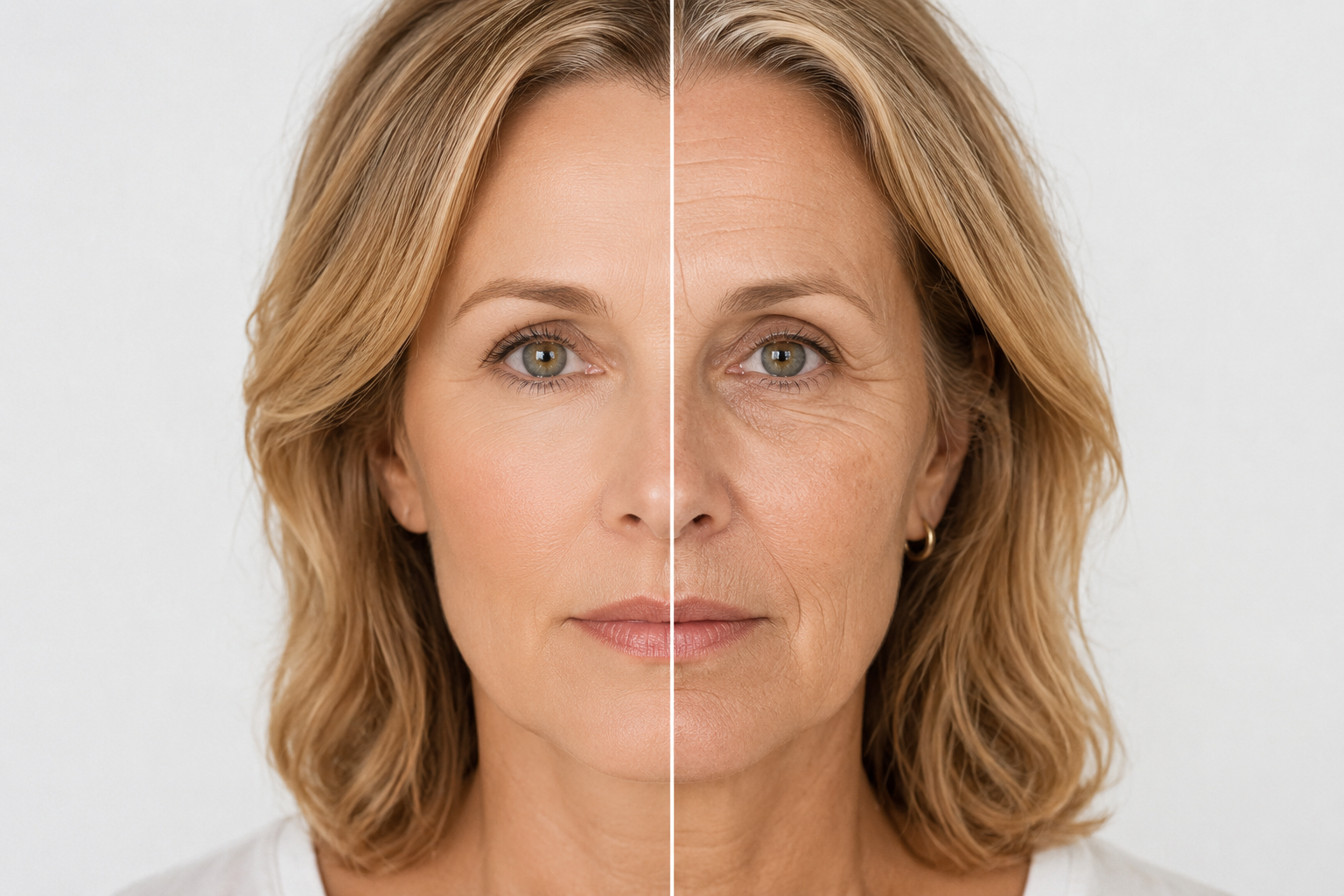
If your skin has felt different lately, drier, less firm, slower to bounce back, you are not imagining it. These changes often begin in your 40s, sometimes earlier, and they are not just about aging. They are about hormones.
Perimenopause changes your skin from the inside out, long before your period actually stops. Understanding why can help you choose treatments that address the real cause, not just the surface.
What Perimenopause Does to Your Skin (and Why)
Perimenopause typically begins in your 40s, sometimes earlier, and can last several years before your period stops completely. During this time, estrogen levels do not decline steadily. They fluctuate, sometimes dropping sharply, and your skin responds to every shift.
Your skin has estrogen receptors throughout its layers, which is why hormonal changes show up there so clearly. As estrogen declines, collagen production slows. Research shows women can lose up to 30 percent of their skin's collagen within the first five years after menopause begins, with a more gradual decline continuing after that.
Beyond collagen, declining estrogen also reduces hyaluronic acid, the natural moisture that keeps skin plump, and slows down elastin production, which affects how well skin bounces back. Together, this is why skin during the menopause transition often feels drier, thinner, and less resilient than it used to.
The Gut-Skin Connection
Hormones are not the only thing shifting during perimenopause. Your gut microbiome changes too, and the two are more connected than most people realize.
The gut and skin share similar barrier and immune functions, and research shows an imbalanced gut microbiome can affect skin health, while gut bacteria also help regulate hormone balance. During perimenopause, as hormone levels fluctuate, gut health can shift as well, which may compound the skin changes you are noticing.
This is one reason why treating perimenopausal skin as a purely topical issue often falls short. The skin, gut, and hormones function as one connected system, not separate problems.
Treating Perimenopausal Skin at the Root
There are many ways to support skin during hormonal transitions, from topical treatments to lifestyle changes to medical interventions. At SageMED, our providers take a functional medicine approach, focusing on root causes that work with your biology rather than temporarily masking what is happening beneath the surface.
Two treatments stand out for directly addressing collagen loss: PRP therapy and hormone optimization.
1. PRP for Collagen Rebuilding
Since collagen loss is one of the most visible parts of this connected system, treatments that directly stimulate new collagen production can make a meaningful difference. This is where PRP therapy comes in.
PRP uses concentrated platelets from your own blood to deliver growth factors directly into your skin. These growth factors signal fibroblasts, the cells responsible for producing collagen, to rebuild what hormonal decline has slowed down. Rather than temporarily plumping the skin, PRP works with your body's own repair process to support firmer, more resilient skin over time.
Matching PRP to Your Skin Concerns
For surface concerns like texture and fine lines, Collagen P.I.N.® Microneedling pairs precision microneedling with PRP to stimulate collagen and elastin production. For deeper concerns like volume loss and structural sagging, a PRP Facelift or Cellenis® Derma PRP can restore facial volume while supporting longer-term collagen production. Your provider can help determine which approach, or combination, fits your skin best.
2. Hormone Optimization for the Root Cause
PRP can rebuild collagen, but it does not address why collagen production slowed in the first place. For many women, that root cause is declining and fluctuating hormone levels. This is why addressing hormones directly can be an important complement to skin-focused treatments.
Hormone optimization looks beyond standard "normal" lab ranges and instead aims to restore estrogen, progesterone, and testosterone to levels that support how you actually feel and function, including how your skin behaves.
How Hormone Optimization Works at SageMED
At SageMED, Hormone Optimization & BHRT begins with precision lab testing rather than relying on symptoms alone. Bioidentical hormones, which are molecularly identical to what your body naturally produces, can be delivered through several methods including BioTE® pellets, creams, patches, or injections depending on your goals and lifestyle.
Are You a Good Candidate?
Most women beginning to notice skin changes in their late 30s or 40s are good candidates for exploring these options. You may benefit most if you are experiencing dryness, reduced firmness, or dullness alongside other perimenopause symptoms like irregular cycles, sleep disruption, mood changes, or fatigue.
PRP is generally well tolerated for most people in good health. Hormone optimization requires a more thorough evaluation, since it involves lab testing and a personalized treatment plan based on your health history, symptom severity, and risk profile.
A consultation with lab evaluation is the best way to determine whether one or both approaches make sense for your goals.
What to Expect at SageMED
At SageMED in Bellevue, your visit starts with a real conversation, not a quick prescription. One of our providers, Dr. Eva Miller, N.D., brings over 20 years of integrative medicine experience and treats perimenopause as a whole-body transition, looking at hormones and skin health together rather than as separate concerns. She performs PRP Facelift, and our providers, including Dr. Miller, offer Hormone Optimization & BHRT as part of SageMED's broader functional medicine approach.
For patients focused on surface texture, our aesthetic team, including Dr. Hilla Asadi and Dr. Kiran Bhandari, provides Collagen P.I.N.® Microneedling.
If PRP is right for your skin concerns, your provider will walk you through which option, PRP Facelift, Cellenis® Derma PRP, or Collagen P.I.N.® Microneedling, fits best. If hormone imbalance is part of the picture, your BHRT plan will be built around your lab results and monitored over time to keep levels in an optimal range.
Many patients pursue both approaches together, addressing the skin directly while also supporting the hormonal changes driving it. If you are ready to understand what perimenopause is really doing to your skin, we invite you to book a consultation. Our team serves patients throughout the Greater Seattle area.

Featured Provider
Dr. Eva Miller, N.D.
Naturopathic Physician
With over 20 years of experience serving the Puget Sound region, Dr. Miller blends conventional and natural medicine to treat both the symptoms and the root causes of her patients' health concerns. Her expertise spans hormone optimization for women navigating menopause as well as aesthetic procedures including PRP Facelift and Cellenis® Derma PRP, making her well suited to address perimenopausal skin from both the hormonal root cause and the skin itself.
View bio and schedule →Frequently Asked Questions
Can perimenopause really affect my skin this much?
Yes. Estrogen receptors are present throughout your skin, so hormonal fluctuations during perimenopause directly affect collagen production, moisture retention, and skin thickness. Many women notice these changes years before their period actually stops.
Should I try PRP or hormone optimization first?
It depends on your goals and symptoms. PRP works directly on the skin to rebuild collagen, while hormone optimization addresses the underlying hormonal shifts that may be driving multiple symptoms, not just skin changes. Many patients benefit from combining both, but a consultation can help determine the right starting point for you.
Is bioidentical hormone therapy safe?
Bioidentical hormones are molecularly identical to what your body naturally produces. When properly tested, dosed, and monitored by a qualified provider, BHRT is generally well tolerated. A thorough evaluation of your health history and lab results helps determine whether it is appropriate for you.
This content is for informational purposes only and is not a substitute for professional medical advice, diagnosis, or treatment. Always consult a qualified healthcare provider regarding your medical condition and treatment options.
References
Thornton M. J. (2013). Estrogens and aging skin. Dermato-endocrinology, 5(2), 264–270. https://doi.org/10.4161/derm.23872
Abuaf, O. K., Yildiz, H., Baloglu, H., Bilgili, M. E., Simsek, H. A., & Dogan, B. (2016). Histologic Evidence of New Collagen Formulation Using Platelet Rich Plasma in Skin Rejuvenation: A Prospective Controlled Clinical Study. Annals of dermatology, 28(6), 718–724. https://doi.org/10.5021/ad.2016.28.6.718
read this next