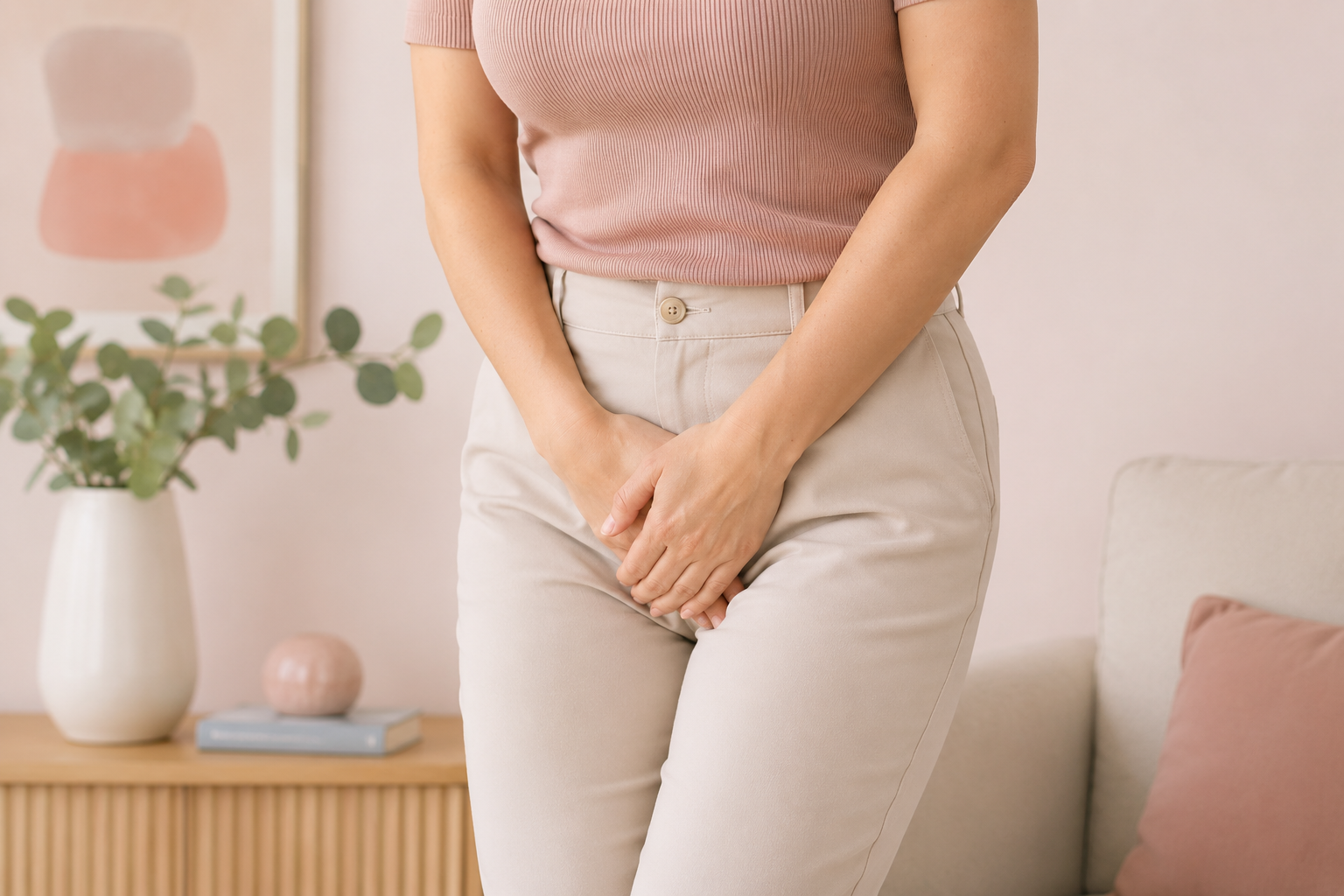
Which Bladder Leak Treatment Is Right for You?
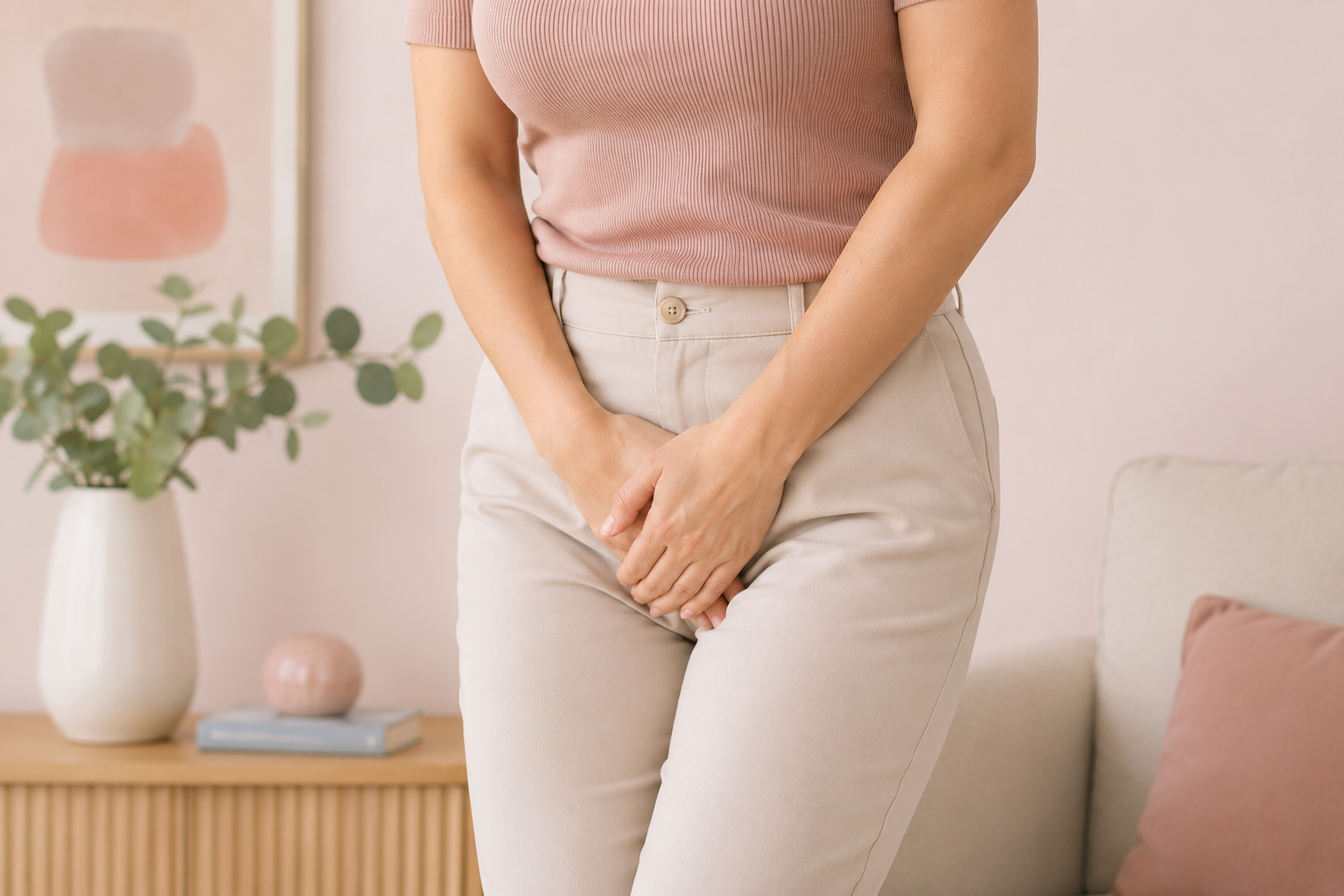
Bladder leaks are common, but that does not mean you have to just live with them. Whether it happens during a workout, a laugh, or without much warning at all, there are real paths forward, and the right one depends on what is actually causing your symptoms.
The good news is that most people do not need to jump straight to anything drastic. Treatment often starts simple and builds from there, based on what works for your body. Here is how to think through your options, step by step.
Start with the basics: lifestyle and bladder training
For most people, the first step is not a treatment at all. It is a set of small habit changes that can meaningfully reduce leaks on their own.
This usually includes staying consistently hydrated rather than cutting back on fluids, since concentrated urine can irritate the bladder and make symptoms worse. It also means paying attention to common bladder irritants like caffeine, alcohol, and carbonated drinks, and noticing whether cutting back helps. A gradual voiding schedule, slowly increasing the time between bathroom trips, can also retrain the bladder over several weeks.
Many providers recommend keeping a simple bladder diary during this stage. Tracking when you go, how much you drink, and when leaks happen can reveal patterns that make the next step, if you need one, much clearer.
Strengthening the pelvic floor
For many types of bladder leaks, especially the kind that happens with coughing, laughing, or exercise, pelvic floor exercises are usually the next step. These are often called Kegels, and they work by strengthening the muscles that support the bladder and control urine flow.
The tricky part is that Kegels only help if they are done correctly, and a significant number of people unintentionally tense the wrong muscles when trying them on their own. This is where a pelvic floor physical therapist can make a real difference. A trained therapist can confirm you are engaging the right muscles, track your progress, and adjust your program as your strength improves.
If you have tried Kegels on your own without much change, that does not necessarily mean they will not work for you. It may just mean it is time for more guidance.
When you need extra support building strength: Emsella and similar therapies
Sometimes, even with correct technique and consistent effort, the pelvic floor needs more than voluntary exercise can provide. This is where technology like Emsella can help.
Emsella uses a treatment chair and high-intensity focused electromagnetic energy, known as HIFEM, to stimulate the pelvic floor muscles directly. You remain fully clothed and simply sit through each session, while the energy triggers thousands of muscle contractions similar to what happens during a Kegel, but at an intensity and depth that voluntary effort alone typically cannot reach. Many people describe feeling a tingling or pulsing sensation, without pain, and there is no downtime afterward.
This kind of therapy is generally considered a next step for people who have already tried pelvic floor exercises or guided physical therapy, rather than a replacement for them. Some providers use it alongside physical therapy, since the two approach pelvic floor strength from different angles: PT helps with coordination and technique, while this kind of stimulation focuses on raw muscle strengthening.
As with any treatment, results vary from person to person, and it is worth talking with a provider about whether this approach fits your specific situation.
When to talk to a specialist
Most bladder leaks can be improved with the steps above, but a few signs mean it is time to talk with a provider sooner rather than later.
See a doctor promptly if you notice blood in your urine, pain during urination, a sudden change in your symptoms, or any weakness or numbness in your legs or pelvic area. These are not common causes of ordinary bladder leaks and deserve a proper evaluation.
Beyond those warning signs, it is also worth reaching out if leaks are affecting your daily life, your confidence, or your sleep, even if nothing above applies. You do not need a red flag to justify getting help. A provider can help identify what is actually causing your symptoms and guide you toward the option that fits your situation best.

Featured Provider
Dr. Hannah Bressler, N.D.
Naturopathic Doctor
Dr. Hannah Bressler is a Naturopathic physician with a profound commitment to integrative and individualized patient care. She specializes in women's health, sports medicine, regenerative medicine, and physical medicine modalities, and holds a certification in integrative pelvic floor therapy. Dr. Bressler focuses on pelvic floor therapy, Emsella, and pelvic floor PRP, guiding patients through informed, empowering decisions about their health.
View bio and schedule →Frequently Asked Questions
Can bladder leaks be fully resolved, or just managed?
For many people, bladder leaks improve significantly or resolve with the right combination of lifestyle changes, pelvic floor training, and, if needed, additional support like Emsella. How much improvement is possible depends on the underlying cause, which is why an evaluation is often the clearest starting point.
How long does it take to notice a difference?
This varies by person and by approach. Lifestyle changes and bladder training are often given a few weeks to show results, while pelvic floor strengthening, whether through guided exercise or added support like Emsella, tends to build gradually over several sessions rather than all at once.
Do I need a diagnosis before trying any of these steps?
Not necessarily for general lifestyle changes, but if your symptoms are new, severe, or accompanied by any of the warning signs above, it is best to see a provider first so any underlying cause can be identified.
read this next