

Platelet-Rich Plasma (PRP) Therapy
At SageMED in Bellevue, non-surgical PRP injections are designed to support tissue healing, reduce pain, and improve function for joint, tendon, and ligament conditions using your body’s natural repair response.
EmCyte Super-Concentrated PRP with 10–12× platelet concentration
Targeted injections for osteoarthritis, tendon pain, and sports injuries
Minimally invasive care with little downtime for many patients

What Is Platelet-Rich Plasma (PRP) Therapy?
Platelet-Rich Plasma (PRP) injections are a non-surgical regenerative treatment used for a variety of musculoskeletal injuries and chronic pain conditions. At SageMED in Bellevue, serving the Greater Seattle area, we exclusively use EmCyte Super-Concentrated PRP, a closed sterile system designed to produce a 10–12× higher platelet concentration than many standard gel-tube systems used by other providers.
PRP is derived from your own blood and contains a higher concentration of platelets and growth factors than whole blood. Research supporting PRP continues to grow across multiple conditions, though results can vary depending on the diagnosis, severity, and individual health factors.
Platelets play a key role in the body’s natural healing process. They contain proteins and growth factors involved in signaling tissue repair. When an injury occurs, platelets move to the affected area and help coordinate the healing response.
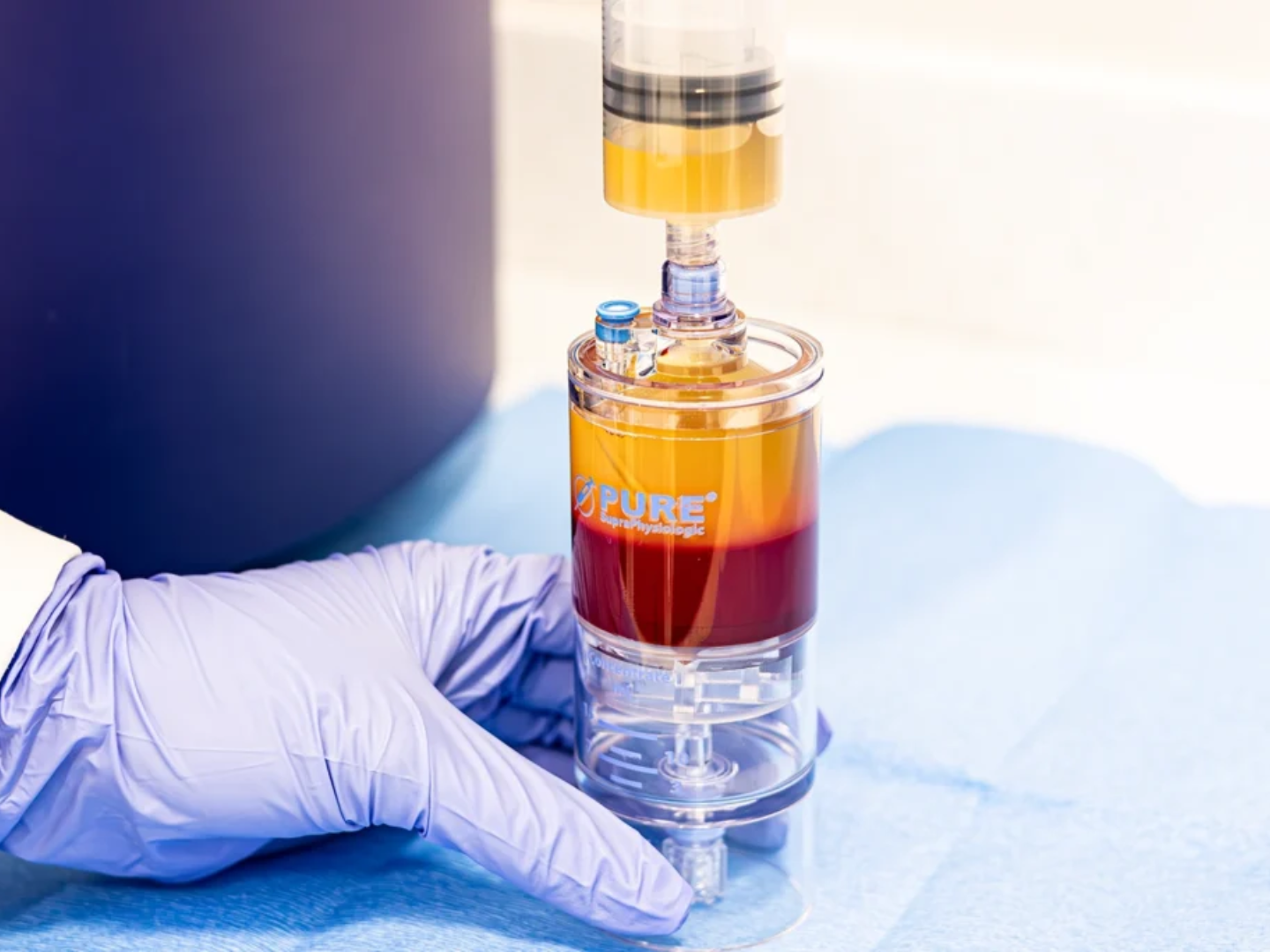
How PRP Is Created
Understanding how PRP is prepared
PRP is prepared in a stepwise process designed to concentrate platelets and growth factors above baseline blood levels.
- Blood collection: A small blood sample is drawn from the patient.
- Centrifugation: The sample is placed in a centrifuge, which spins rapidly to separate blood components. This process concentrates platelets above baseline levels, and the final concentration varies by system and protocol.
- Preparation for injection: The concentrated platelet-rich plasma contains a higher density of platelets with fewer red blood cells than whole blood. The PRP is then injected into the injured or painful area to support tissue healing and repair signaling.
At SageMED, we utilize the EmCyte Super-Concentrated PRP system, a proprietary closed sterile process designed to achieve a 10–12× higher platelet concentration than many standard gel-tube systems used by other providers. This approach is intended to support consistent, sterile PRP preparation.
How PRP Works
How PRP supports tissue healing
The concentrated platelets in PRP release growth factors and signaling molecules that may help support the body’s natural repair processes in injured or stressed tissues.
The intended effects can include support for:
- Tissue repair signaling in tendons, ligaments, muscles, and joint structures
- Collagen remodeling and extracellular matrix support
- Regeneration support for tendons, ligaments, and other connective tissues
Over time, this process can support functional improvement and symptom relief. Individual response varies based on the condition treated, severity of degeneration or injury, overall health, and rehabilitation plan.
Safety and Advantages
Safety profile of PRP injections
Because PRP is prepared from your own blood, it is generally well tolerated. As with any injection procedure, potential risks can include temporary soreness, swelling, bruising, and rare infection or bleeding. Your clinician will review your medical history and help determine whether PRP is appropriate for you.
Long-term support vs temporary relief
Unlike cortisone injections, which primarily reduce inflammation in the short term, PRP is intended to support the body’s healing response and tissue repair signaling. Some patients report longer-lasting improvement, though outcomes vary by diagnosis, severity, and individual response.
Interested in exploring other regenerative treatments? Learn more about Regenerative Injection Therapy and how it may complement PRP in an individualized plan.
What Conditions Can Be Treated With PRP?
PRP is commonly used for a wide range of musculoskeletal conditions, making it a versatile option for both chronic and acute concerns. Conditions often treated with PRP include:
- Osteoarthritis: PRP may help support pain reduction and function in some patients, and may help delay more invasive interventions for select cases.
- Tendon and ligament injuries: Common uses include tennis elbow, rotator cuff tendinopathy or partial tears, patellar tendinopathy, and Achilles tendinopathy.
- Degenerative joint conditions: PRP may help support joint comfort and mobility by supporting tissue signaling and cartilage environment health.
- Lower back pain: Some clinicians use PRP approaches for select spinal conditions, depending on diagnosis and clinical appropriateness.
- Muscle tears: May support healing for certain acute muscle injuries as part of a broader rehab plan.
- Plantar fasciitis: May reduce symptoms and support tissue recovery in some patients.
- Sports injuries: May be used for ligament sprains, muscle strains, and overuse injuries depending on severity and evaluation.
While PRP may be helpful for many patients, effectiveness varies. A consultation is essential to confirm whether PRP fits your diagnosis, activity demands, and long-term goals.
Benefits of PRP Therapy
PRP therapy offers a non-surgical option that aims to work with your body’s existing healing pathways. Potential benefits may include:
- Non-surgical and minimally invasive: PRP is administered using a needle-guided injection, without incisions or general anesthesia.
- Supports natural healing: Growth factors in PRP are involved in the body’s repair signaling and tissue remodeling processes.
- Potential for longer-lasting improvement: By supporting tissue recovery rather than masking symptoms, PRP may provide sustained improvement for select conditions, though results vary.
- Minimal downtime for many patients: Many patients return to routine activity shortly after treatment, depending on injection site, job duties, and clinician guidance.
- May reduce reliance on medication: PRP may support function and comfort without relying on repeated anti-inflammatory injections, depending on the care plan.
It is important to consult with a qualified clinician to determine whether PRP is appropriate for your condition, imaging findings, and health history.

Why Choose PRP Therapy at SageMED?
At SageMED, we take an integrative approach to regenerative orthopedic therapies. Our use of EmCyte Super-Concentrated PRP is part of a standardized, closed sterile PRP preparation process designed to support consistent quality and a high platelet concentration (10–12× compared with many gel-tube systems).
What Sets Us Apart
High-concentration PRP preparation
We use EmCyte Super-Concentrated PRP with 10–12× platelet concentration compared with many standard gel-tube systems.
Advanced sterile processing
Closed sterile preparation supports consistent handling and quality control during PRP creation.
Personalized treatment planning
We evaluate diagnosis, severity, biomechanics, and recovery goals to tailor injection approach and follow-up.
Expert technique and guidance
Our clinicians are trained in PRP preparation protocols and injection planning to support safety and outcomes.
If you have chronic pain or a musculoskeletal injury, PRP therapy may be a fit. Contact SageMED to set up a consultation at our Bellevue clinic, serving patients across the Greater Seattle area.
PRP Preparation and Reminder Guidelines
Before your procedure at SageMED, please follow these guidelines to support the best possible outcome. Your provider may adjust instructions based on your medical history and treatment plan.
Medication and supplement guidance
- Avoid anti-inflammatories (NSAIDs such as ibuprofen and similar medications) for 2 weeks prior to the injection and throughout the recovery period if directed by your clinician.
- Do not stop prescription medications unless your SageMED clinician specifically instructs you to do so.
- Discontinue fish oil 3 days before the procedure and resume the day after therapy, unless your clinician advises otherwise.
Lifestyle guidelines before and after PRP
Refrain from alcohol, smoking, or any tobacco use for 2 weeks leading up to the procedure and during the recovery period if possible, as these can affect healing response and circulation.
Day-of procedure notes
- A recommended 18-hour fast may be required before the injection, depending on your provider’s protocol. Please bring a meal to eat after the blood draw.
- The full visit may last approximately 90 minutes depending on preparation, injection planning, and post-care instructions.
- Arrange for someone to drive you home afterward if advised by your clinician.
Physical therapy and recovery planning
- Schedule physical therapy to begin about 1 week after the procedure, or as directed by your provider.
- Follow your personalized post-procedure plan, including activity modifications, rehab timing, and follow-up scheduling.
Additionally, please adhere to any specific pre-procedure instructions provided by your SageMED clinician. We look forward to supporting you in your treatment journey.
Ready to explore PRP therapy?
Schedule a consultation with a SageMED regenerative medicine clinician to review your diagnosis, discuss PRP candidacy, and build a personalized orthopedic injection plan.
Exploring other regenerative options?
SageMED offers a range of clinician-guided orthopedic injections and regenerative therapies, including Prolotherapy and Orthobiologic Injection Therapy, to support joint, tendon, and ligament healing.
View Orthopedic Injection Services