

Integrative Psychiatric Program for Treatment Resistant Depression
When standard treatment hasn't worked, there's still a path forward.
A structured care pathway for patients who haven't responded to conventional antidepressants — looking deeper for root causes and offering advanced, FDA-approved options when medication alone isn't enough.
Consultation is with Dr. David Deichert.

You're Not Alone.
You're not out of options.
If you've tried one antidepressant after another without relief, or the side effects felt worse than the depression itself, you're not out of options. You may be dealing with treatment resistant depression, and it requires a different kind of care than what most psychiatric visits offer.
At SageMED our Integrative Psychiatric Program run by Dr. David Deichert is built specifically for patients who haven't responded to conventional treatment. We look deeper, treat smarter, and offer advanced options that go beyond another prescription trial.
How We Approach Treatment Resistant Depression
A structured, three-step process — not a series of guesses.
Rule Out What's Being Missed
Before assuming it's treatment resistance, we look for underlying medical, hormonal, and nutritional factors that are often overlooked and can mimic or worsen depression.
We screen for:
- Thyroid & hormonal imbalances
- Nutritional deficiencies (B12, Vitamin D, iron)
- Sleep disorders & chronic inflammation
- Medication interactions being overlooked
Get Medication Management Right
Many patients haven't actually failed medication — they've failed inadequate dosing or the wrong combination. We refine your regimen with precision before moving further.
We evaluate:
- Inadequate dosing or premature medication changes
- Wrong medication class for your presentation
- Pharmacogenomic factors (how your body metabolizes medication)
- Augmentation strategies not yet explored
Explore Advanced, FDA Approved Treatments
When medication alone isn't enough, we offer advanced options with strong evidence behind them.
Options include:
- TMS — non-invasive magnetic stimulation targeting underactive brain regions
- Spravato® — FDA-approved nasal spray working on a different pathway than traditional antidepressants
- Combination protocols tailored to your specific response pattern
Not every patient needs every step. Your provider will help determine the right fit for where you are today.
Advanced Treatment Options
When medication alone isn't enough, these FDA-approved treatments offer a different path forward.

Transcranial Magnetic Stimulation (TMS)
TMS uses targeted magnetic pulses to stimulate underactive regions of the brain associated with depression. It's non-invasive, requires no anesthesia, and has no systemic side effects.
How it works:
- Focused magnetic pulses are delivered to the prefrontal cortex
- Stimulates neural activity in regions linked to mood regulation
- Typical course involves multiple sessions over several weeks
Ideal for patients who:
- Haven't responded adequately to antidepressant medication
- Want a non-medication or medication-adjunct option
- Prefer a treatment with no systemic side effects
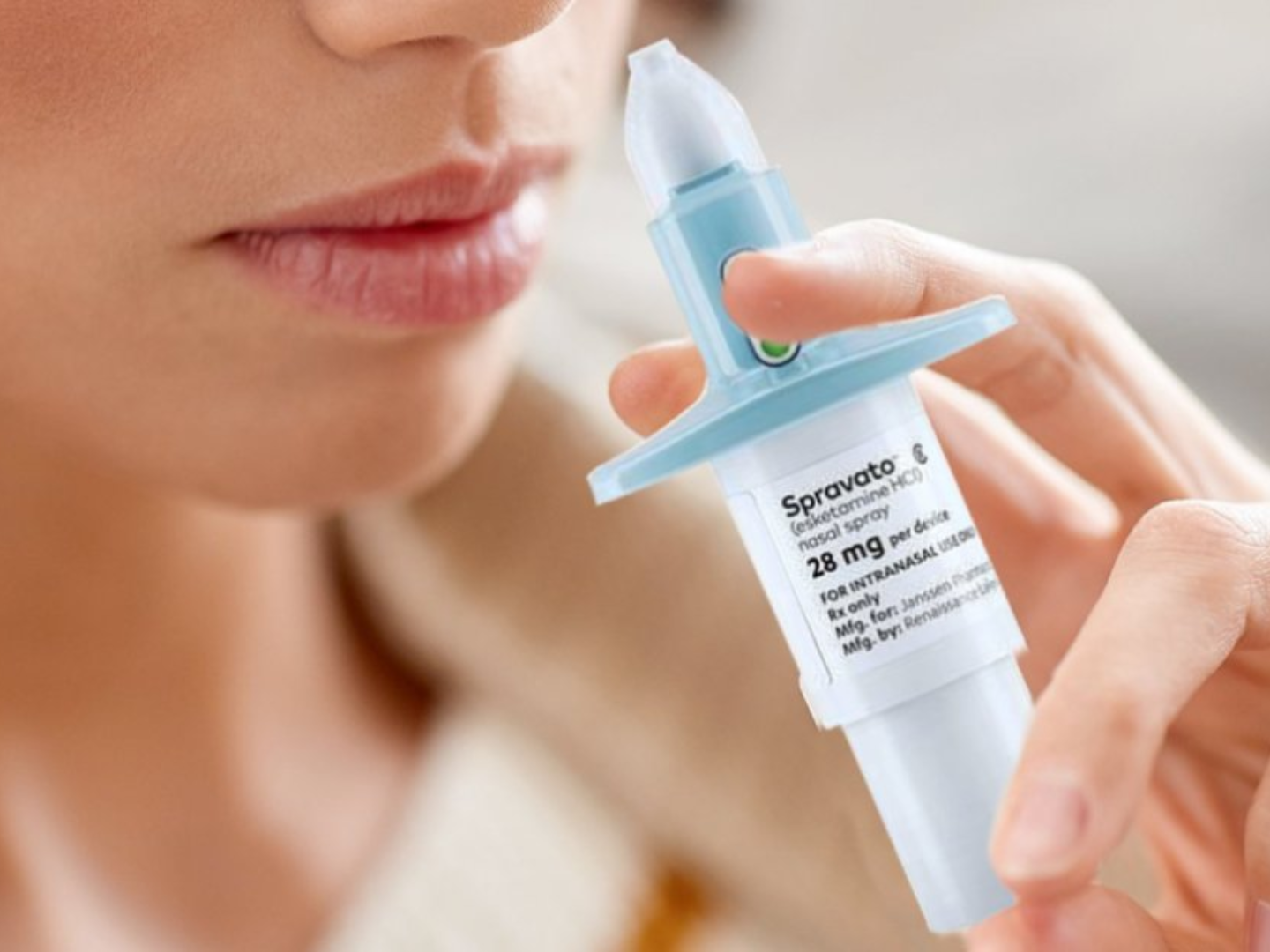
Spravato® (Esketamine Nasal Spray)
Spravato is an FDA-approved nasal spray for treatment-resistant depression. It works on the NMDA receptor system — a completely different mechanism than traditional antidepressants — and is administered under medical supervision in our office.
How it works:
- Self-administered nasal spray under clinician supervision
- Targets the NMDA glutamate receptor pathway
- Used alongside an oral antidepressant for treatment-resistant depression
What to expect:
- Each session includes a 2-hour monitored observation period
- Patients may not drive for the rest of the day after treatment
- Initial phase typically involves twice-weekly sessions
Patient Stories
Real experiences from SageMED patients who found a path forward through advanced treatment options.
You May Be a Candidate for This Program If:
A quick self-check — if any of these sound familiar, it's worth a conversation.
- You've tried two or more antidepressants without adequate relief
- You've experienced difficult side effects that led you to stop treatment
- You're curious about TMS or Spravato but aren't sure if you qualify
- You want a provider who looks for root causes, not just symptom management
- You're ready for a more thorough, personalized approach to your care
Not sure if this is right for you?
Many patients start here because they feel stuck after standard treatment. You can also complete SageMED's mental health screening tools before a visit. These are the same clinically validated questionnaires used by our team. Results are for screening only and do not diagnose treatment-resistant depression.
Frequently Asked Questions
Answers to common questions about treatment planning, safety, and what to expect.
How do I know if I actually have treatment-resistant depression?
A diagnosis is based on your full treatment history, symptom pattern, and response to prior therapies. We review what has been tried, for how long, at what doses, and whether other medical drivers may be contributing.
Can I complete a screening before my consultation?
Yes. SageMED offers clinically validated mental health screening tools, including PHQ-9, GAD-7, and MADRS. You can complete them before your visit and share the results with your provider. They are for screening only and do not replace a clinical evaluation.
Do I have to choose between TMS and Spravato?
Not necessarily. Some patients are better suited for one option, while others benefit from a staged or combined plan. Your provider recommends the approach based on your history, goals, and safety profile.
What is the time commitment for these treatments?
TMS typically involves short in-office sessions over several weeks. Spravato sessions require monitored observation after dosing. We map out your schedule in advance so the plan is realistic and sustainable.
Is Spravato safe?
Spravato is FDA-approved and administered only in REMS-certified settings with medical supervision and monitoring. Safety protocols are built into every visit.
Can I still continue my current medications?
In many cases, yes. Medication plans are reviewed and adjusted as needed for safety and effectiveness. You should not stop or change psychiatric medications without guidance from your provider.

Dr. David Deichert
Program Lead
Dr. David Deichert is an integrative Nurse Practitioner specializing in treatment-resistant depression and ADHD. He leads SageMED's TMS and Spravato® programs, combining evidence-based psychiatry with root-cause evaluation to personalize care.
His approach focuses on creating a practical, measurable plan that moves beyond repeated medication trials and helps patients regain function, stability, and quality of life.
You don't have to keep waiting to feel like yourself again.
Take the next step with a focused consultation and a clear treatment plan tailored to your history and goals.