
Is My Jawline Acne "Hormonal"? What That Word Really Means
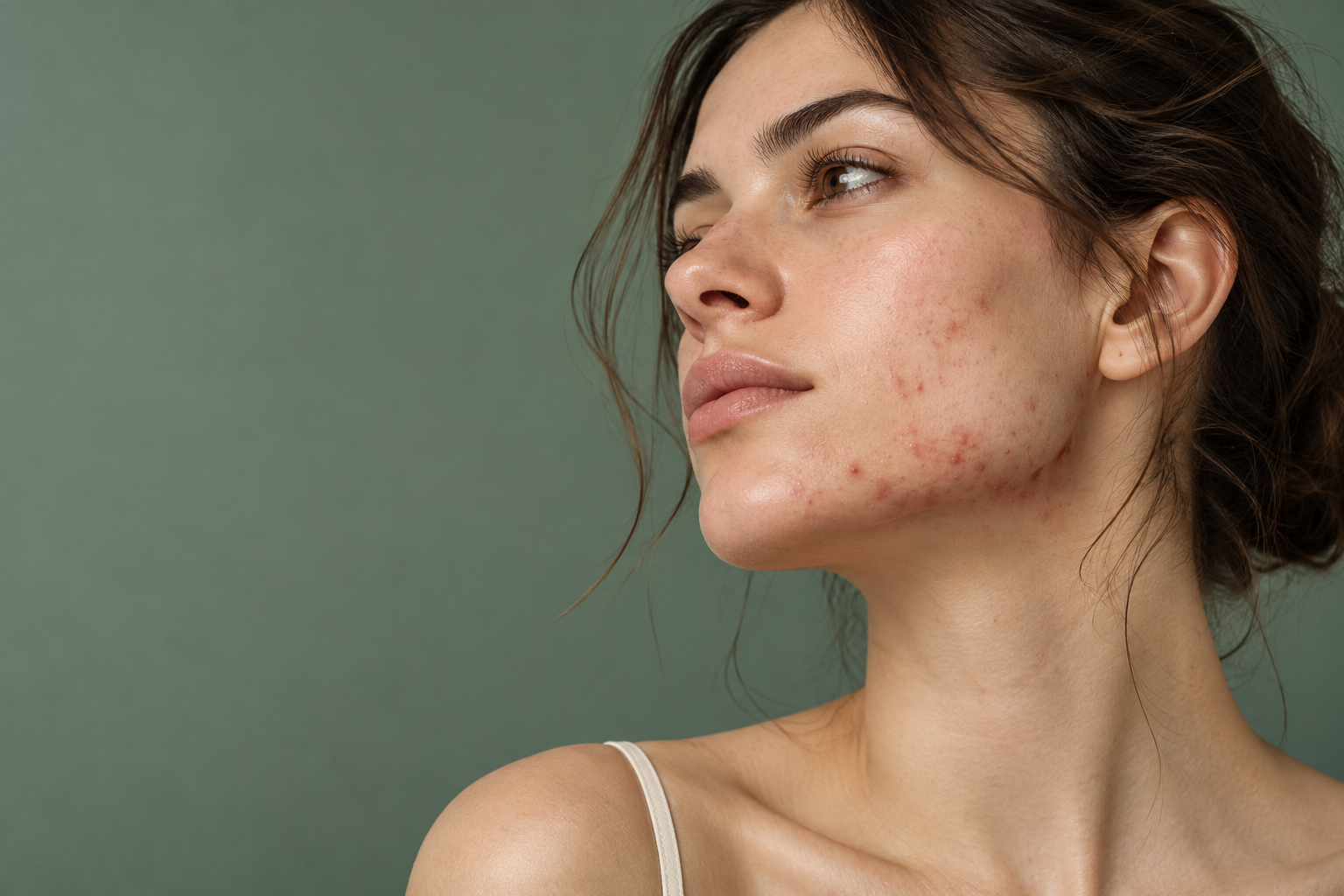
Jawline breakouts get labeled "hormonal" almost automatically. Sometimes that's right. Often it's only part of the story. "Hormonal acne" isn't an official diagnosis, and the same-looking bumps can have very different causes, which is exactly why so many people cycle through products that never quite work.
First, what counts as "true" acne?
When most people say "acne," they mean acne vulgaris: the classic clogged-pore breakouts, including blackheads, whiteheads, red bumps, and deeper tender spots.
Acne vulgaris forms when four things come together: extra oil, pores clogged with dead skin cells, acne-related bacteria, and inflammation. Some bumps look like acne but have a completely different cause. We'll get to those look-alikes below.
All true acne is a little bit hormonal
Androgens are hormones like testosterone that everyone has, men and women alike. They signal oil glands to grow and make more oil, which is why acne usually starts at puberty and rarely develops without androgen activity. So in a sense, all acne vulgaris involves hormones.
The real question is whether your skin is simply sensitive to normal hormone levels (very common), or whether something is actually shifting your hormones.
When hormones really are the main driver
Testosterone therapy or anabolic steroids: extra testosterone means extra oil, and acne is a common side effect of TRT. New or worsening breakouts are worth reviewing with your prescriber, since dosing and labs may need a look.
Polycystic ovary syndrome (PCOS): acne alongside irregular periods, extra facial or body hair, or scalp hair thinning can point to PCOS, which often involves blood sugar and insulin too.
Menstrual cycle shifts: many people who menstruate notice flares in the week before their period.
Birth control changes: stopping the pill, or starting some progestin-only methods, can trigger breakouts.
Sudden or severe acne at any age: this deserves a closer look, especially if it comes with other body changes.
One surprise: a jawline pattern is a clue, not proof. Many people with jawline acne have completely normal hormone levels on lab testing.
Other causes that have nothing to do with hormones
Diet: high-sugar, high-glycemic eating has the strongest link to acne. Dairy and whey protein may play a role for some people, though the research is still developing.
Gut health: the “gut-skin connection” is getting a lot of attention, for good reason. People with acne tend to have different gut bacteria, and microbiome-focused treatment may help alongside other treatments. The link is strong for rosacea, where treating bacterial overgrowth in the small intestine (SIBO) has been shown to improve skin in these patients. When gut symptoms are part of the picture, more in-depth testing, such as breath testing for SIBO or a comprehensive stool analysis, can look for infections, inflammation, and imbalances that routine labs don’t capture. It’s one more piece we look at, not a one-size-fits-all fix.
Medications and supplements: steroids, lithium, some seizure medications, and high-dose vitamin B12 can all trigger breakouts. Some people also notice breakouts with high-dose biotin, common in hair, skin, and nail supplements, though the evidence is mostly anecdotal. Biotin can also throw off certain lab results, including hormone and thyroid tests, so mention it before any bloodwork.
Friction and products: helmets, masks, phones, makeup, hair products, and even skincare can clog pores and cause acne.
Stress and poor sleep: both can make breakouts worse.
The acne look-alikes
These look like acne but aren't acne vulgaris at all:
"Fungal acne": a yeast overgrowth in hair follicles, often small, itchy, uniform bumps on the forehead, chest, or back.
Bacterial folliculitis: infected hair follicles that can look like pimples.
Razor bumps: ingrown hairs along the beard line and jaw, very common in people who shave.
Perioral dermatitis: clusters of small bumps around the mouth, nose, or eyes.
Rosacea: redness and bumps on the cheeks, nose, and chin, usually without blackheads.
Why guessing can backfire
Here's the tricky part: the wrong treatment can make things worse. Antibiotics can worsen fungal acne. Steroid creams can flare perioral dermatitis. Harsh acne products can inflame rosacea. And no cream will fully fix acne that's being driven by a medication, dysbiosis, blood sugar, or a hormone shift.
The good news: once the cause is clear, there are very effective options.
What actually helps
Treatment ultimately depends on what's driving your acne, but common options include:
Topical treatments like retinoids, azelaic acid, and benzoyl peroxide
Spironolactone, a prescription used mainly for women that blocks androgen effects at the skin
Blood sugar, nutrition, and stress support as part of the bigger picture
You'll also see supplements like DIM, spearmint tea, or zinc promoted for hormonal acne. The research on these is limited or mixed, so at best they're add-ons within a bigger plan, not stand-alone fixes.
The bottom line
"Hormonal" isn't a diagnosis. It's a starting point. Figuring out what's really behind your breakouts, whether it's hormones, a medication, your diet, a look-alike, or a mix, is what turns a frustrating guessing game into a plan that works.
That's where an integrative approach shines. We look at your skin, your history, your medications, your labs, and your lifestyle together to find the root cause, not just the symptom.
Book a consultation to build a plan for your skin.